

Kitchen gadgets flood social feeds with glossy promises of faster meals and effortless skill.
Many home cooks buy into convenience only to discover another object shoved into a drawer after a few uses.
Disappointment grows when flashy tools fail to deliver better food or easier cooking. Voices of chefs, bloggers, and practical home cooks point to a pattern of hype beating usefulness.
Careful comparison shows one highly praised gadget falls short, while simpler tools quietly outperform it in everyday kitchens.
Top Contender – The Instant Pot
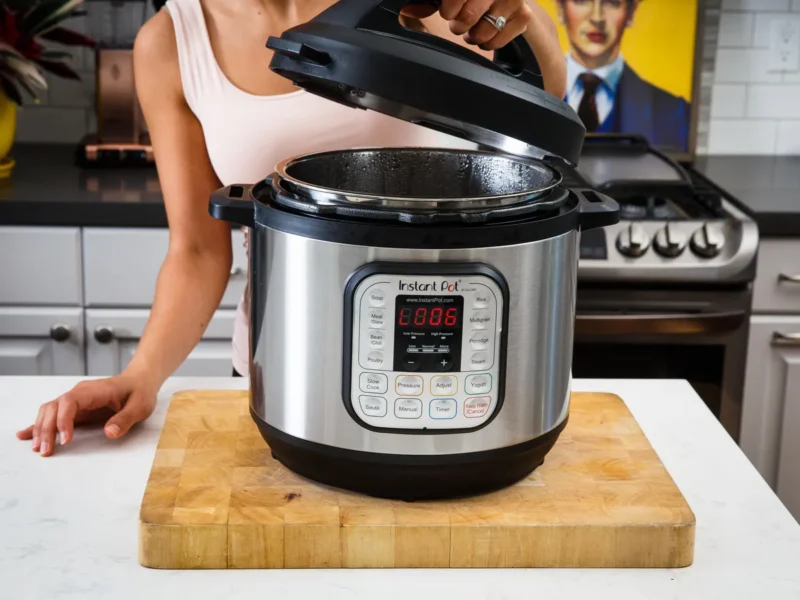
Modern kitchens often chase shortcuts, and few products gained attention as fast as the Instant Pot. Marketing framed it as a do-everything solution capable of replacing multiple appliances while saving time and effort.
Expectations rise quickly when a single machine promises pressure cooking, slow cooking, sautéing, steaming, and even yogurt making in one compact shell.
Daily use tends to lower that excitement. Cooking results vary more than expected, especially for recipes that depend on precise timing and texture.
Beans finish unevenly, roasts cook inconsistently, and liquids behave unpredictably under pressure.
Extra time often disappears while waiting for pressure to build or release, defeating the original promise of speed.
Common frustrations repeatedly surface during regular use, especially around control and consistency:
- Cooking times rarely match recipe estimates, leading to trial-and-error meals
- Re-pressurizing mid-cook interrupts flow and adds uncertainty
- Button-heavy interfaces slow down simple decisions
Cooking satisfaction also drops as automation replaces instinct. Traditional slow cooking rewards patience, gradual change, and sensory feedback.
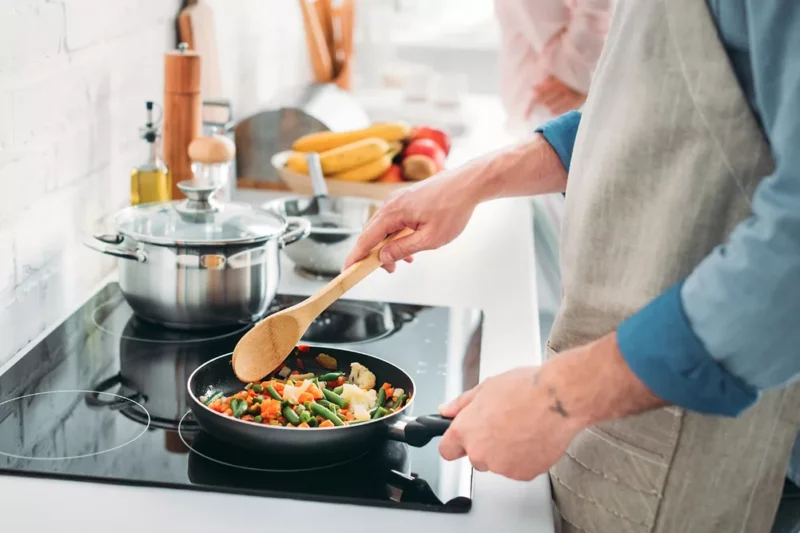
Smells, sounds, and visual cues guide decisions, while sealed pressure removes that connection.
Unease lingers as well, since a tightly sealed, high-pressure device demands trust many home cooks never fully develop.
What Works Better
Slow cookers and crock pots offer a quieter, steadier approach. Preparation feels relaxed, and timing flexibility allows meals to adapt to busy schedules.
Ingredients soften gradually, flavors deepen naturally, and little supervision is required once cooking begins.
Several practical advantages explain continued loyalty to these tools:
- Long cook times reduce risk of overcooking\
- Simple controls remove guesswork
- Aromas build steadily, signaling progress without alarms
Modern models still support convenience through timers and warm modes, preserving ease without sacrificing control.
Other Commonly Overrated Gadgets
Crowded drawers often reveal a pattern of single-task tools purchased with good intentions. Many solve problems that barely exist, trading simplicity for plastic complexity.
In fact, some of these tools are hyped online with marketing copy that sounds too polished, often written by automated systems.
If you’re skeptical about whether a review or product claim was generated by AI, you can verify it with an AI detector.
One-Trick Tools That Waste Space
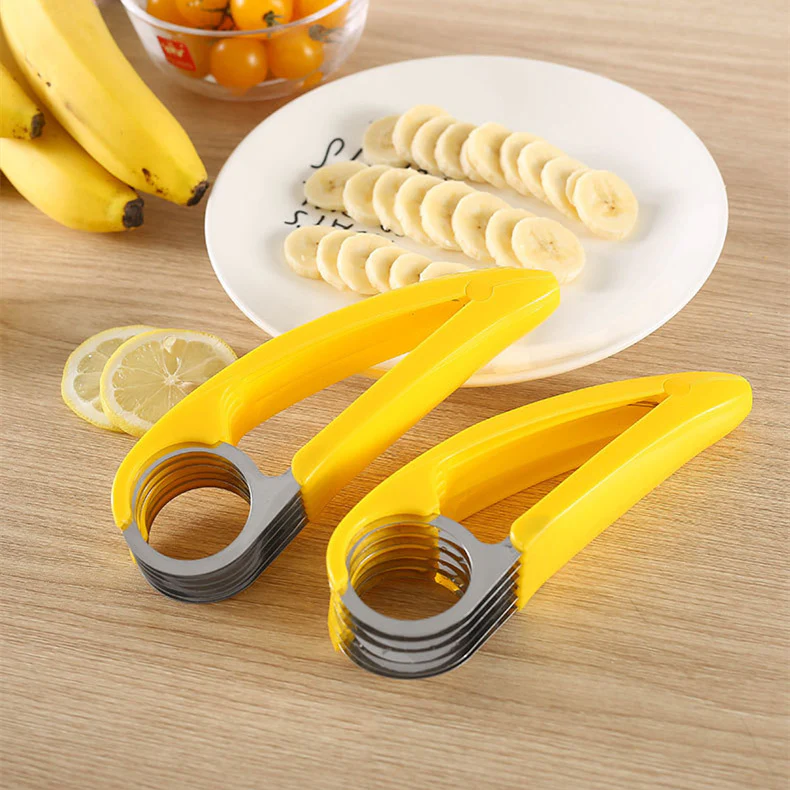
Banana slicers promise uniform pieces yet demand ideal fruit size and firmness. Cleaning blades and crevices takes longer than slicing manually.
Storage cost outweighs the benefit for a task finished in seconds with a knife.
Avocado slicers struggle even more. Variations in size and ripeness defeat fixed designs, often crushing soft flesh instead of cutting cleanly.
Knife and spoon combinations adapt instantly to any avocado.
Strawberry hullers add steps to an already quick task. Tiny gadgets disappear inside drawers, then resurface too late. Paring knives remove hulls smoothly with better control.
Overengineered Tools for Simple Tasks
Electric egg cookers claim efficiency but lose advantage after setup and cleanup enter routine.
Saucepan boiling suits occasional needs, while microwave tricks cover speed-focused moments.
Herb scissors and strippers look clever yet create cleanup headaches.
Leaves lodge into narrow gaps, and delicate herbs bruise instead of slicing cleanly.
Better results come with tools already within reach:
- Chef’s knives deliver clean cuts\
- Fingers handle soft herbs gently
- Flat blades clean easily under running water
Egg separators complicate a basic kitchen skill. Most cooks manage yolks using shells or hands with minimal effort. Extra parts only increase clutter.
Gadgets Pretending to Save Time
High-powered blenders attract buyers with performance claims, yet real usage remains limited in many homes.
Cost per use climbs sharply without daily smoothie or juice routines. Food processors or mid-priced blenders complete common tasks with less expense and storage strain.
Bluetooth thermometers add screens and apps to simple temperature checks.
Devices break, batteries fail, and replacements cost more than expected. Instant-read thermometers provide accuracy without added fragility.
Style Over Substance Picks
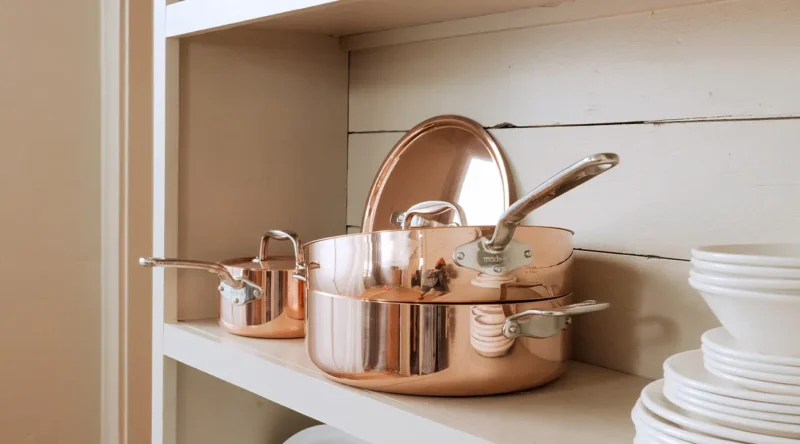
Visual appeal often outweighs function during cookware purchases.
Copper pots shine on display yet demand constant polishing. Scratches show quickly, heat misuse causes damage, and maintenance becomes another chore.
Cast iron cookware thrives under abuse. High heat, oven transfers, and open flames pose no threat. Longevity stretches across decades with minimal care.
Teflon cookware raises additional concerns.
Coatings degrade, scratches shorten lifespan, and safety worries grow as surfaces wear. Cast iron and ceramic-coated pans reduce those risks while offering durability.
Truly Useless Gimmick Gadgets
Some items add novelty without purpose. Pasta measuring tools attempt precision where estimation works fine. Handfuls of kitchen scales outperform plastic guides.
Pizza scissors appear clever but clean poorly and waste space. Wheels or serrated knives cut faster and store easily.
Bagel guillotines occupy large footprints and prove awkward to wash. Serrated bread knives handle bagels safely without special devices.
Oven mitts often remain unwashed and lose grip over time. Professional kitchens favor alternatives for good reason:
- Thick towels grip better
- Fabric washes easily
- Flexibility suits varied tasks
What Really Works – Invest in the Basics
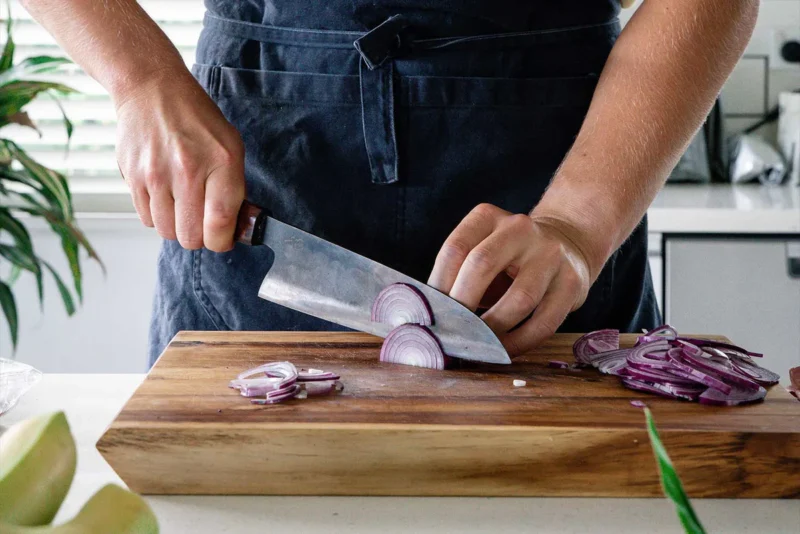
Reliable kitchens function best when every tool earns space through repeated, practical use.
Consistency matters more than novelty, and tools that support daily cooking habits prove far more valuable than gadgets chasing shortcuts.
Confidence grows when equipment responds predictably and adapts across tasks without complication.
Preparation begins with cutting, and strong fundamentals matter most at that stage. Sharp chef’s knives reduce effort, improve control, and speed up nearly every recipe.
One well-maintained blade often replaces several specialty knives.
Cutting surfaces matter just as much, since stability and blade protection affect safety and longevity.
Several prep essentials consistently outperform trend-driven alternatives:
- Eight-inch chef’s knives handle slicing, chopping, and mincing with ease
- Wooden or poly boards protect edges and resist slipping
- Manual can openers avoid mechanical failure and work without power
Cooking tools benefit even more when durability takes priority. Cast iron cookware performs across stovetop, oven, grill, and open flame without damage.
Heat retention improves searing and baking results, while simple care keeps pans functional for decades. Instant-read thermometers remove uncertainty and prevent overcooked proteins without added complexity.
Versatility also defines smart appliance choices. Food processors handle chopping, shredding, mixing, and puréeing tasks that otherwise require multiple gadgets.
Cleanup remains manageable, and storage stays reasonable compared to single-use machines.
Summary
Cluttered kitchens rarely improve cooking results. Flashy gadgets promise ease but often complicate daily routines.
Simpler tools prove cheaper, more effective, and easier to master.
Confident cooking grows through basics used every day, not novelty items chasing trends.