
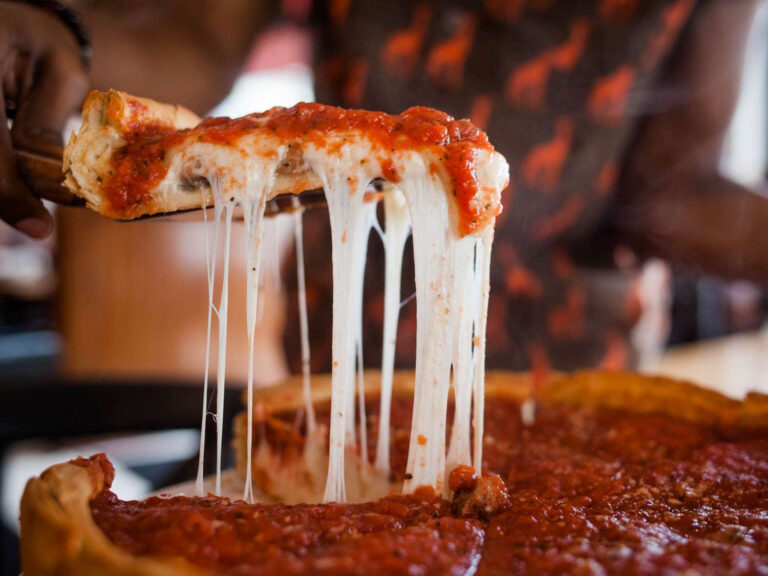
I’ll never forget the look on my French friend Claire’s face when I first suggested we grab Chicago deep-dish pizza. She wrinkled her nose like I’d offered her gas station sushi. To her, it seemed too indulgent compared to the delicate dishes she grew up respecting, until one bite changed everything. I get why people might judge deep-dish at first, but here’s why I think this pizza absolutely deserves a spot on anyone’s must-try list.
It’s a Masterpiece of Intentional Layers
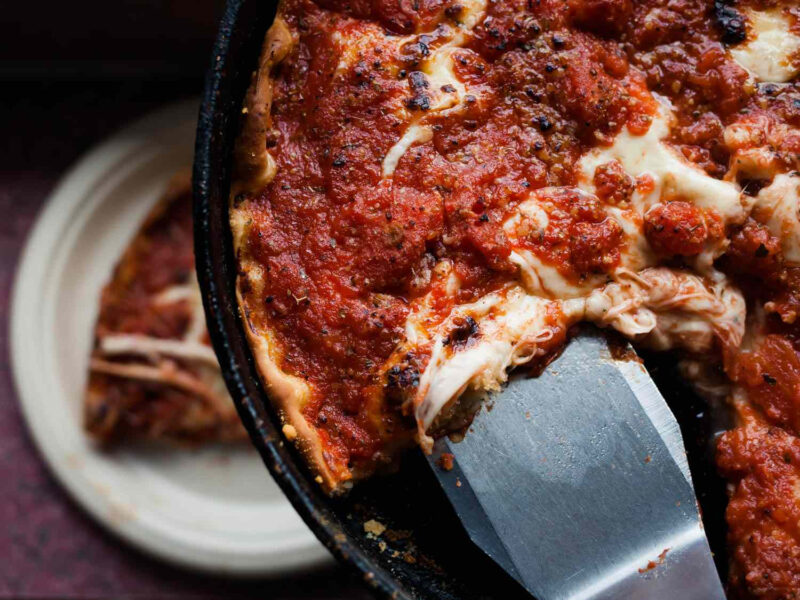
What I love about Chicago deep-dish is that every layer is there for a reason. First, there’s the golden, buttery crust. It’s like a sturdy bowl that stands up to all those rich fillings. Right above that comes a generous layer of mozzarella that almost acts as a blanket, protecting the toppings and sealing in all the flavors.
The real twist is the chunky tomato sauce that goes on top, not underneath. It’s spread over everything, which helps keep the cheese from burning as the pizza bakes longer than a typical pie. Every step in this process feels intentional, and you can tell there’s real thought behind how each ingredient is layered. It all comes together by the time you slice in.
What strikes me most about this approach is how it mirrors the finesse found in French pastry techniques. Think of a mille-feuille, where each component plays a specific role in the final bite. Deep-dish demands the same precision and forethought. Get the order wrong or pull it too early, and you’ve ruined it. When done right, though, it’s something greater than the sum of its parts.
Its Impressive History
Chicago deep-dish pizza is a classic piece of American culinary history with roots dating back decades. The dish’s origin story is a bit complicated, with an air of mystique surrounding its exact invention. Pizzeria Uno in Chicago prefers the narrative that the pizzeria’s original owner, Ike Sewell, invented deep-dish pizza in 1943, though the dish likely underwent many transformations at that same location over time before becoming the staple it is today.
I think this matters a lot, especially when you consider how French cuisine treats dishes with long, well-documented histories. There’s a certain respect that comes with knowing a recipe has been refined and defended by generations of cooks. Deep-dish absolutely deserves that same recognition, and its backstory is as rich as the pizza itself.
The “Stuffed Pie” Construction
Here’s where I ask you to shift your thinking entirely. Rather than viewing deep-dish as a flatbread with heavy toppings, see it as a savory pie, similar to a quiche or tourte. This reframing changes everything for those who appreciate French culinary traditions and the care that goes into structured dishes.
The original Pizzeria Uno’s pizza was simpler than the loaded versions people know today, but several variations have emerged over the years. This includes double-crusted and cheese-stuffed versions and caramelized-crust pan pizzas. Some of the most famous recipes trace their roots back to traditional Italian Easter pies, which are enclosed and stuffed, showing how deep-dish embraces creativity and evolution in ways French gastronomes can appreciate.
It’s a True Expression of Regional Pride
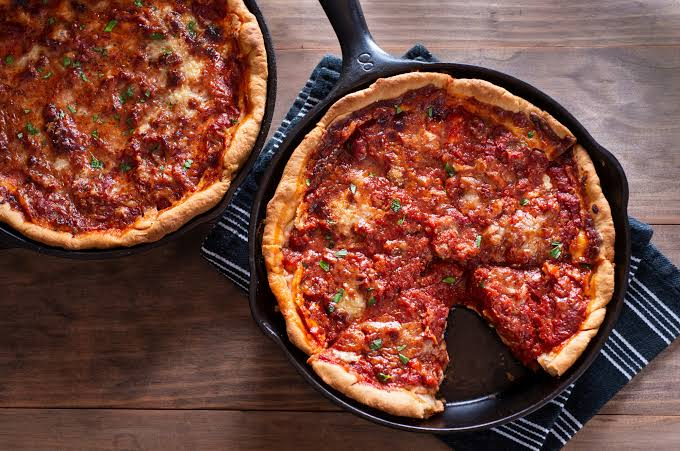
Chicago’s fierce pride in deep-dish mirrors how different regions in France protect and celebrate their local specialties. Think of Champagne, Roquefort cheese or cassoulet. These dishes represent terroir, a product of their specific environment, culture and the people who’ve defended them for generations.
Deep-dish does the same thing for Chicago. It defines the city the way cassoulet defines Castelnaudary. In August 2024, the Fête du Cassoulet was celebrated by around 50,000 people at a four-day festival featuring communal meals, music and festivities. You can find that same kind of passion for deep-dish in Chicago.
Its Dedication to Authenticity
The most respected deep-dish pizzerias are celebrated for preserving the original formula and avoiding modern trends. This dedication to a classic recipe, passed down through generations and protected fiercely, is a value that resonates deeply within French culinary culture.
It takes real skill and restraint to keep traditions alive while also adapting them to what people love today. The best pizza makers hand-press the dough into the pan, use San Marzano tomatoes and take their time with the bake. That kind of commitment to authenticity is something I think any serious food lover can appreciate, no matter where they’re from.
It’s a Blend of Various Culinary Influences
Deep-dish is what you get when classic Italian pizza-making meets a bit of American creativity. People took the tried-and-true techniques and turned them into something new and seriously hearty.
French cuisine has similar examples of this kind of evolution and regional adaptation. Bouillabaisse is a traditional fish stew that originated in Marseille, yet it has various regional and modern variations, such as Bouillabaisse Parisienne and Bouillabaisse de Sète. I love how these hybrid dishes keep things interesting and spark conversations between different regions and generations.
Should You Give the Chicago Deep-Dish Pizza a Chance?
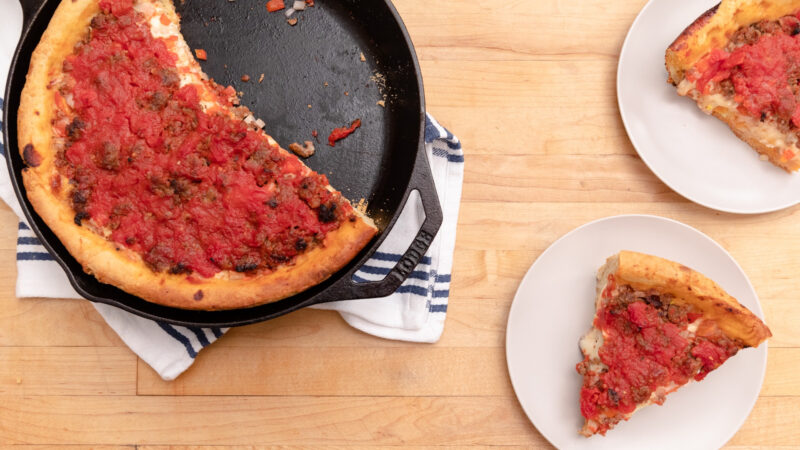
Chicago deep-dish is a carefully constructed savory pie with real history, an expression of regional pride and a testament to authenticity and tradition. It’s not heavy or unsophisticated. It’s layered, intentional and rooted in the same core values behind French cuisine.
The next time you have the chance, try it with an open mind. Let go of any assumptions and appreciate the craftsmanship that goes into every slice. You might end up surprised, just like Claire was when she took that first bite.